A dream about birds usually points to how free, hopeful or restricted you feel in waking life. Birds in flight tend to speak of freedom, perspective and good news, while caged, injured or dead birds often point to something that feels held back or finished. The details matter: the kind of bird, what it was doing and how you felt will shape the meaning far more than the bird alone. Below you will find the most common versions of this dream and how different traditions have read them.
What does it mean when you dream about birds?
Birds are one of the oldest images people use for the mind and spirit. They move between earth and sky, they sing, they migrate, and they are hard to catch. So in a dream they often stand for a thought, a wish or a message that is trying to reach you, or for your own sense of how much room you have to move.
The feeling in the dream is the best guide. A bird that lifts you with delight reads very differently from one that panics against a window. Think of a woman who dreams of a robin on her kitchen sill the week she has decided to change jobs: for her the bird feels like encouragement. Someone stuck in a draining situation might dream of the same robin and feel only sadness that it cannot come in.
Treat the bird as a mirror for a current mood rather than a verdict. Ask what in your life feels light, restless, trapped or newly possible, and the dream usually starts to make sense.
What does it mean to dream about birds flying freely?
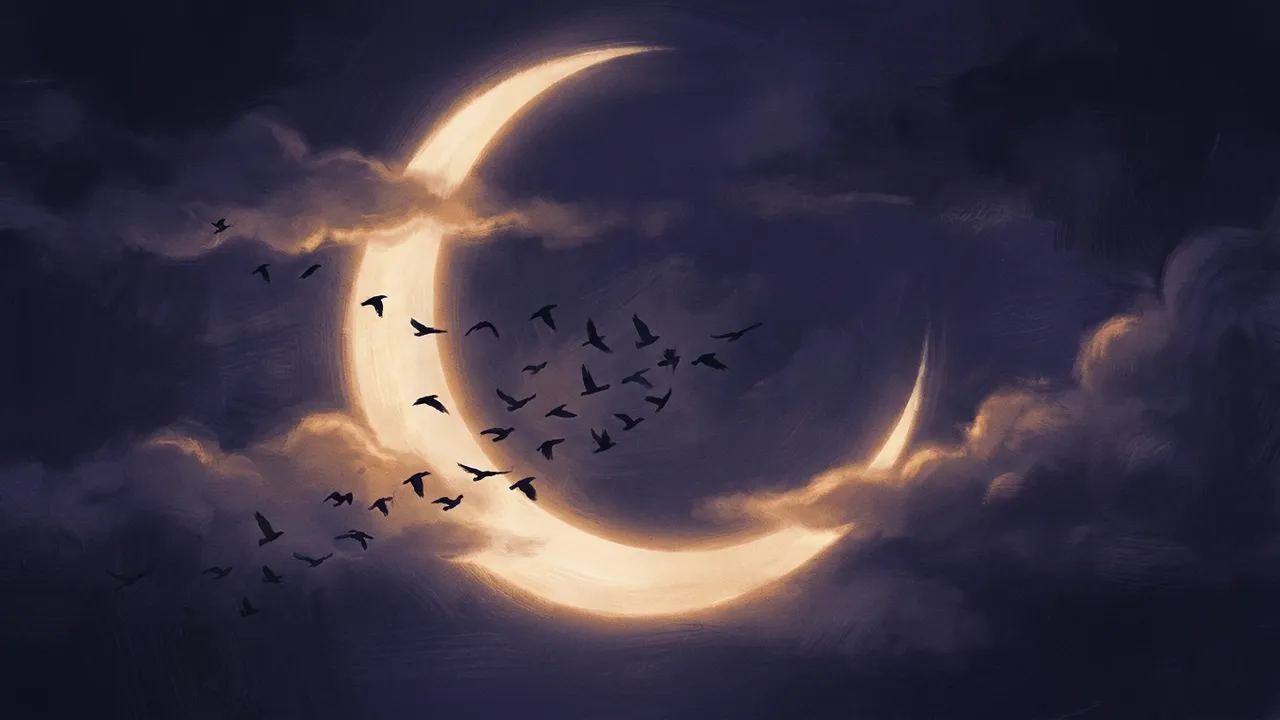
Birds flying freely are among the most positive versions of this dream. They commonly reflect a sense of release, wider perspective or a decision that has lifted a weight. If you watched a flock cross the sky at dusk and felt calm, you may be settling into a change you have already accepted.
Direction and behaviour add detail. Birds flying upward suggest ambition or hope. A flock moving together can point to belonging, a team or family you feel part of. A single bird circling high above may mirror a wish to step back and see your situation from a distance.
If the flight felt frantic, with birds scattering or crashing into one another, the dream may be showing mental overload: too many plans or worries moving at once, none of them landing.
What does a bird in a cage mean in a dream?
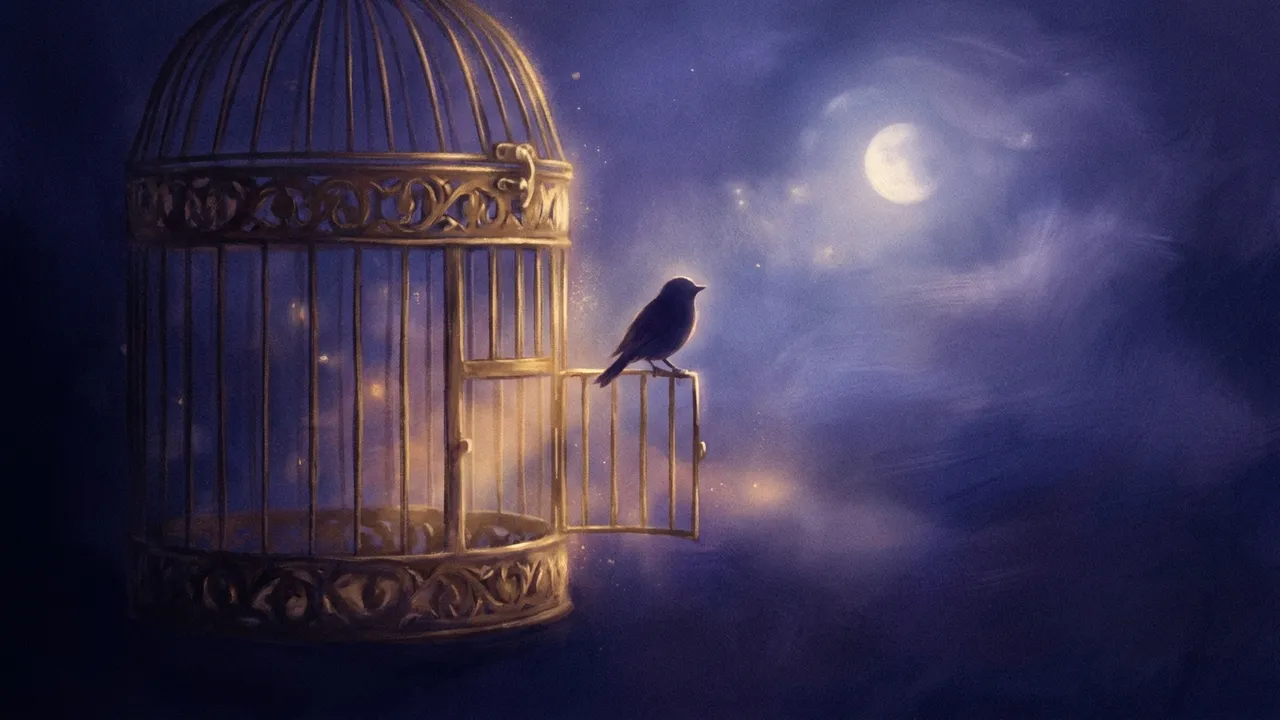
A caged bird is a direct picture of something that wants to move but cannot. It might be a talent you do not use, a relationship with too many rules, or a job where you keep your voice down. The question is who closed the door, and whether it is actually locked.
Notice what happens next. A bird that sits calmly in an open cage can suggest you have more freedom than you believe and have simply not tried it. A bird you set free often marks a readiness to let go of a limit, a habit or an old role. A bird you cannot reach, singing from inside a cage, may point to a feeling that is real but still unspoken.
Some people dream of keeping the bird safe and feel tender rather than guilty. In that case the cage may represent protection, a care you are giving or receiving, not confinement.
What does it mean when a bird flies into your house?
A bird entering the house brings the outside world into your private space. In dream readings this is often linked to news, a visitor, or an idea you can no longer keep at a distance. The house stands for you, so a bird inside can suggest a thought has found its way into your inner life and wants attention.
How the bird behaves matters. A calm bird that perches and stays may signal welcome change. A frightened bird beating against windows can reflect your own unease about something unexpected, such as a sudden decision, a move or a conversation you have been avoiding.
Helping the bird find the open window is a hopeful image. It suggests you are able to handle the disruption and let it pass through, rather than being overwhelmed.
What does it mean to dream about a dead bird or a sparrow?
A dead bird is unsettling, yet it rarely predicts anything. More often it reflects an ending: a hope that faded, a plan that fell through, a friendship that went quiet. Grief can show up this way, even over something small. If you found the bird gently, with sorrow instead of fear, the dream may be helping you acknowledge a loss you have not named.
An injured bird is slightly different. It points to something fragile that could still recover, perhaps your confidence or a relationship that needs care. What you do in the dream is telling: picking it up, ignoring it or burying it.
Sparrows are small, ordinary and everywhere, so they tend to stand for everyday worries, humble blessings or the value of little things. A sparrow landing near you can feel like reassurance that you are noticed. A noisy group of sparrows may mirror a busy mind of small, chattering concerns.
How do psychologists read a dream about birds?
Carl Jung saw birds as symbols of the spirit, of thoughts and of the transcendent side of the psyche, since they rise above the ground. In that view a bird can represent an insight or a part of you reaching toward something larger. Dark or predatory birds can stand for the shadow, qualities you push away but still carry.
Freud and many of his followers tended to read flight in dreams in terms of desire, freedom from restraint and, in some interpretations, sexuality. You do not have to accept that framework, but it is a reminder that birds can carry wishes you do not say out loud.
Present-day dream researchers generally describe dreams as a mix of memory, emotion and imagination, and many suggest that the feelings in a dream reflect what matters to you right now. From this angle the bird is a flexible image your mind borrows to express lightness, confinement or loss. Your own associations count: a childhood pet budgie, a parent who fed pigeons or a bird that woke you every morning will shape what it means.
What do Christian, Islamic and Hindu traditions say about birds in dreams?
In Christian and Biblical tradition, birds carry several meanings. The dove appears after the flood in Genesis and descends at the baptism of Jesus, so white doves are often read as peace and the Holy Spirit. In the Sermon on the Mount, Jesus says God feeds the birds of the air, and many believers take a calm bird in a dream as a reminder of provision and trust. Birds of prey or ravens can be read as warnings, though Elijah was also fed by ravens.
In classical Islamic dream books attributed to Ibn Sirin, birds are often linked to people, news or provision, and the type of bird shapes the reading. These are traditional interpretations, not rulings, and scholars differ on how much weight dreams carry.
In Hindu tradition, birds are tied to deities and vehicles: the swan (hamsa) to wisdom and Saraswati, the peacock to Kartikeya and Krishna, and Garuda to Vishnu. A dream of these birds is often taken as auspicious or spiritually meaningful. Crows connect with ancestors, especially in rituals that honour the departed, so a crow may be read as a link to family memory.
What should you ask yourself after a dream about birds?
Start with the bird itself. Was it wild or kept, alone or in a flock, close or far? Then ask how you felt in the first moment: relief, fear, tenderness, curiosity. That feeling is usually the most reliable clue to what the dream is about.
Next, look for the parallel in your life. Where do you feel free to move, and where are you holding back? Is there news you are waiting for, or something recently ended? Is there a talent or voice you keep in a cage?
For a short journaling exercise, write the dream in five lines, then complete these sentences: The bird reminded me of… The place it was in felt like… If the bird could speak, it would say… Finish with one small action that matches the feeling, such as making a call, opening a window or letting go of one commitment.
When is a recurring bird dream worth talking about?
Most bird dreams are ordinary and fade within days. If the same dream keeps returning, or leaves you anxious, sad or unable to sleep well, it can help to talk it over with a friend you trust or a counsellor. Repeated dreams often circle something unresolved, and saying it aloud can ease its hold.
This is especially worth doing if the dreams follow a loss or a stressful period. You do not need a dramatic reason to ask for support, and a conversation can bring clarity that journaling alone does not.
Quick tips
- Write down the bird type, its behaviour and your first feeling as soon as you wake, before the details fade.
- Compare the dream with one real situation where you feel free or restricted, and decide on one small step.
- If the dream felt heavy, talk it through with someone or take a short walk outside, ideally somewhere you can hear real birds.
Frequently asked questions
Is dreaming about birds a good or bad sign?
Neither on its own. Free, singing or flying birds are usually read as positive, while caged, injured or dead birds point to restriction or loss. Your feeling in the dream is the better guide.
What does it mean to dream about a flock of birds?
A flock often points to community, shared direction or many thoughts moving at once. If the birds flew in harmony, it may reflect belonging. If they scattered or felt overwhelming, it may mirror a crowded mind.
What does it mean to dream about a bird attacking you?
It can reflect feeling pressured by a worry, a person or an idea that keeps pecking at you. Consider what feels unavoidable at the moment, and whether you can face it more directly.
What does a white bird mean in a dream?
White birds, especially doves, are widely linked to peace, purity and hope. In Christian tradition the dove is tied to the Holy Spirit. Personally, it may mean you long for calm or reconciliation.
What does it mean to dream about a bird landing on you?
A bird landing on your hand or shoulder often feels like trust, reassurance or a message arriving gently. It can suggest that something you were chasing is now coming to you.
Do dreams about birds predict the future?
There is no reliable evidence that dreams foretell events. Traditions read birds as omens, but it is safer to treat the dream as a reflection of your current feelings and hopes.