A dream about bread usually points to what feeds and steadies you: your basic needs, your sense of security, and the people or routines that keep you going. Fresh, warm bread tends to suggest comfort and enough; stale or mouldy bread more often hints at something that has stopped nourishing you. The details matter, though, including who handed you the loaf, whether you were hungry, and how it tasted. Read on to match your own version of the dream to what it may be saying.

What does it mean when you dream about bread?
Bread is one of the oldest foods people share, so in dreams it tends to stand for the plain, essential things: food on the table, a roof, a steady income, a family that sits down together. When bread appears, the dreaming mind is often asking a quiet question: what is actually sustaining me right now?
The answer depends heavily on feeling. If you woke up calm or content, the bread may reflect gratitude or a sense that your needs are met. If you woke up anxious, it may point to worry about money, time, affection or energy running short.
Notice also that bread is made, not found. Someone kneaded, waited and baked. Dreams about it can therefore touch on effort and patience as much as comfort: something you have been working on that needs time to rise.
What does it mean to dream about baking bread?
Baking in a dream is about making something with your own hands. You may be shaping a project, a relationship, a new routine or a change of direction, and the dream shows you where it stands. Dough that rises well can mirror confidence that things are growing. Dough that stays flat, sticks to your fingers or burns in the oven often matches a feeling that you are rushing, or that a key ingredient is missing.
Who you bake for adds meaning. Baking for your family can reflect a wish to provide or to be needed. Baking alone in a quiet kitchen may be about self-reliance, or about giving yourself the care you usually give to others.
If the kitchen was unfamiliar, or you did not know the recipe, it can suggest you are working at something new and have not yet found your method. That is not a warning, just a description of learning.
What does it mean to dream about buying or being given bread?
Buying bread in a dream is an everyday errand, and dreams use everyday errands to talk about exchange: what you pay and what you receive. A cheerful trip to a corner bakery may reflect a fair, easy balance in your life. Struggling to afford a loaf, or arriving to find the shelves empty, often echoes real concern about resources, or a feeling that you are asking for something and not getting it.
Being handed bread by someone else is different. A parent, a stranger or a neighbour offering a loaf can reflect support you are receiving, or support you wish you had. If the giver was someone you have lost, the dream is often about care that still feels present.
Pay attention to whether you accepted it. Refusing a loaf you were hungry for can point to pride or difficulty letting people help.
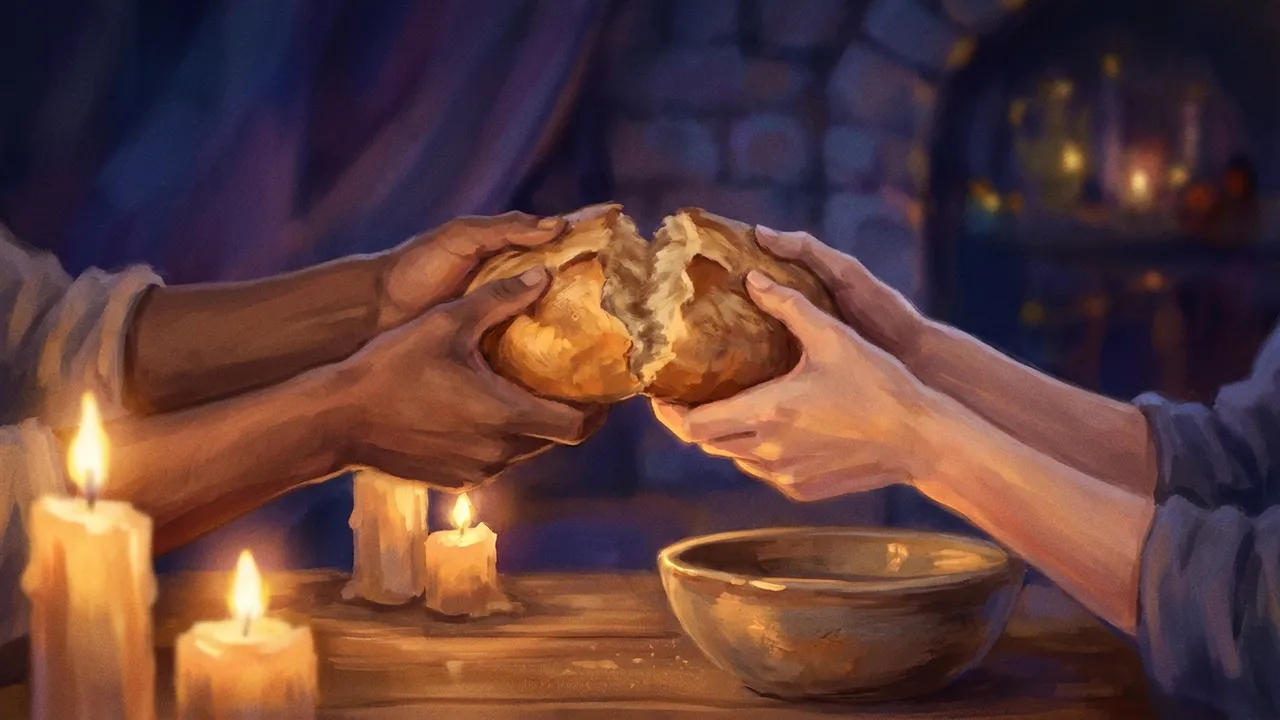
What does it mean to dream about sharing or breaking bread?
Breaking a loaf with other people is among the most universal images of closeness. In a dream it often speaks about belonging: who sits at your table, who is missing, and whether there is enough to go around. A warm, easy meal usually reflects connection. An awkward one, where the loaf is tiny or someone is left out, can show tension in a family, friendship or workplace.
If you were the one dividing the bread, ask how fair it felt. Giving away most of your share may reflect generosity, or it may reflect a habit of putting yourself last. Being the one who received the smallest piece can say something similar from the other side.
Sharing with a stranger often marks openness to something new, such as a new friend, community or phase of life.
What does it mean to dream about stale or mouldy bread?
Stale or mouldy bread is the dream that tends to unsettle people most, yet it is rarely a prediction of anything. It more often describes something that has gone past its best: a routine that no longer feeds you, a job, a friendship, a belief you have held too long, or an opportunity you feel you waited on for too long.
Your reaction helps. If you threw the loaf away without fuss, the dream may be giving you permission to let go. If you tried to eat it anyway, it may reflect putting up with something stale because you fear there is nothing else.
Mould can also carry a quieter message about neglect: something left alone too long, such as a conversation you keep avoiding. Treat it as a prompt to check in, not as a verdict.
What do psychologists say about a bread dream?
Freud treated food in dreams as tied to appetite and early care, since our first experiences of being fed are bound up with comfort and the people who provided it. From that angle, bread can link to dependence, wanting, and the longing to be looked after. Jung was more interested in symbols that carry shared human meaning. Bread, made through grain, fire and transformation, fits his interest in images of change and nourishment of the whole self, not just the body.
Present-day dream researchers generally describe dreams as a place where the mind processes emotions and daily concerns, often using familiar images. On that view, bread is a natural stand-in for anything basic and necessary, and your waking worries about money, time or connection may colour how it appears.
None of this means there is one correct reading. The most useful interpretation is the one that fits your actual life and still feels true after a day or two.

What does bread mean in Christian, Islamic and Hindu traditions?
In Christian tradition bread carries great weight. The Lord’s Prayer asks for daily bread, the Gospels describe the feeding of the crowds, and Jesus calls himself the bread of life. Many Christian readers therefore take a bread dream as a reminder of provision, trust, or spiritual hunger, and the communion loaf can make it a dream about fellowship. Manna in the Old Testament adds the idea of sustenance that arrives when you cannot produce it yourself.
In dream books attributed to Ibn Sirin, bread is often associated with livelihood and lawful provision, and the quality of the loaf is read as the quality of what comes to the dreamer. These are traditional interpretations, not rulings, and scholars and readers differ on them.
In Hindu households, rotis and other breads are everyday offerings, and food is closely tied to the idea of annam, sustenance as something sacred. A dream of bread or roti may be read in that spirit, as gratitude for food and household wellbeing, though there is no single fixed reading.
How can you work out what your bread dream means?
Start with the mood on waking. Write down one word for it before the details fade. Then ask yourself: where in my life do I feel fed, and where do I feel hungry? Who do I eat with, and who do I wish I ate with? Is there something I have been keeping past its time because letting it go feels risky?
A short journaling exercise: spend five minutes describing the loaf as if you were a baker, including its colour, smell, warmth and who made it. Then spend five minutes writing what you would need to feel properly nourished this week, in practical terms. Circle one item you can do in the next two days.
Often the dream is less about a grand meaning and more about a small, overlooked need, such as a proper meal, a phone call or a rest.
When is a recurring bread dream worth talking about?
Most bread dreams are ordinary and fade quickly. If the same dream keeps returning, especially one of hunger, empty shelves or food being taken away, and it leaves you distressed or affects your sleep, it can help to talk it through with someone you trust.
If food worries are real in your life, or your dreams are tied to eating difficulties or a hard period, a doctor, counsellor or support service can offer practical help. Sharing a dream is not a sign something is wrong. It is simply another way of being heard.
Quick tips
- Write the dream down within a few minutes of waking, including the type of bread, who was there and how you felt, since the feeling is usually the key.
- Ask what in your life currently feels fresh and what feels stale, and pick one small thing to change this week.
- If the dream involved sharing, reach out to someone you have not eaten or talked with in a while.
Frequently asked questions
What is the bread dream meaning in a simple sentence?
The bread dream meaning most often relates to nourishment, security and the basics you rely on. Fresh bread leans toward comfort and enough, while stale bread points to something that no longer feeds you. Your feelings in the dream decide which way it tilts.
Is dreaming about fresh bread a good sign?
Many people find it reassuring, and it often reflects contentment, gratitude or a project that is going well. It is better read as a mirror of how you feel than a promise about the future. If the loaf felt warm and welcoming, take that as a pointer to what is working.
What does it mean to dream about bread biblically?
In Christian reading, bread connects to daily provision, the manna in the wilderness, and the bread of life in the Gospels. A bread dream may be taken as a reminder of trust or spiritual hunger. Readers and churches interpret this differently, so treat it as reflection, not doctrine.
Why did I dream about moldy bread?
Mouldy bread often reflects something neglected or past its time, such as a habit, a relationship or a conversation put off. It does not mean something bad will happen. Ask what you have been putting up with, or avoiding, and whether it is time to deal with it.
What does dreaming about eating bread mean?
Eating bread suggests you are taking in comfort or meeting a need. If it tasted good, it may reflect satisfaction. If it was dry, tasteless or hard to swallow, it may reflect effort without much reward at the moment.
Does dreaming about bread mean I am hungry?
Sometimes, literally, if you went to bed hungry. More often the dream points to a different kind of hunger such as rest, attention, affection or purpose. Notice what you felt was missing when you woke up.