A dream about frogs usually points to transformation: something in your life is changing, growing or ready to be cleaned out. The exact meaning depends on how the frog felt to you, whether it was friendly, slimy, loud or simply there. A calm frog often suggests renewal and good timing, while a frightening one can mirror worry about something you would rather not touch. Frogs live between water and land, so they often show up when you are between two stages of life.
What does it mean when you dream about frogs?
At its simplest, a frog is a creature of in-between states. It starts life as an egg, becomes a tadpole, then grows legs and walks onto land. When one hops into your sleep, your mind is often pointing at a change that is still underway: a new job you have not fully stepped into, a relationship shifting shape, a belief you are slowly outgrowing.
Feelings matter more than the animal itself. If you woke up amused or peaceful, the frog tends to stand for renewal, luck or a light, playful energy you may be neglecting. If you woke up disgusted or uneasy, it may point at something you find awkward to deal with, such as a conversation you keep avoiding.
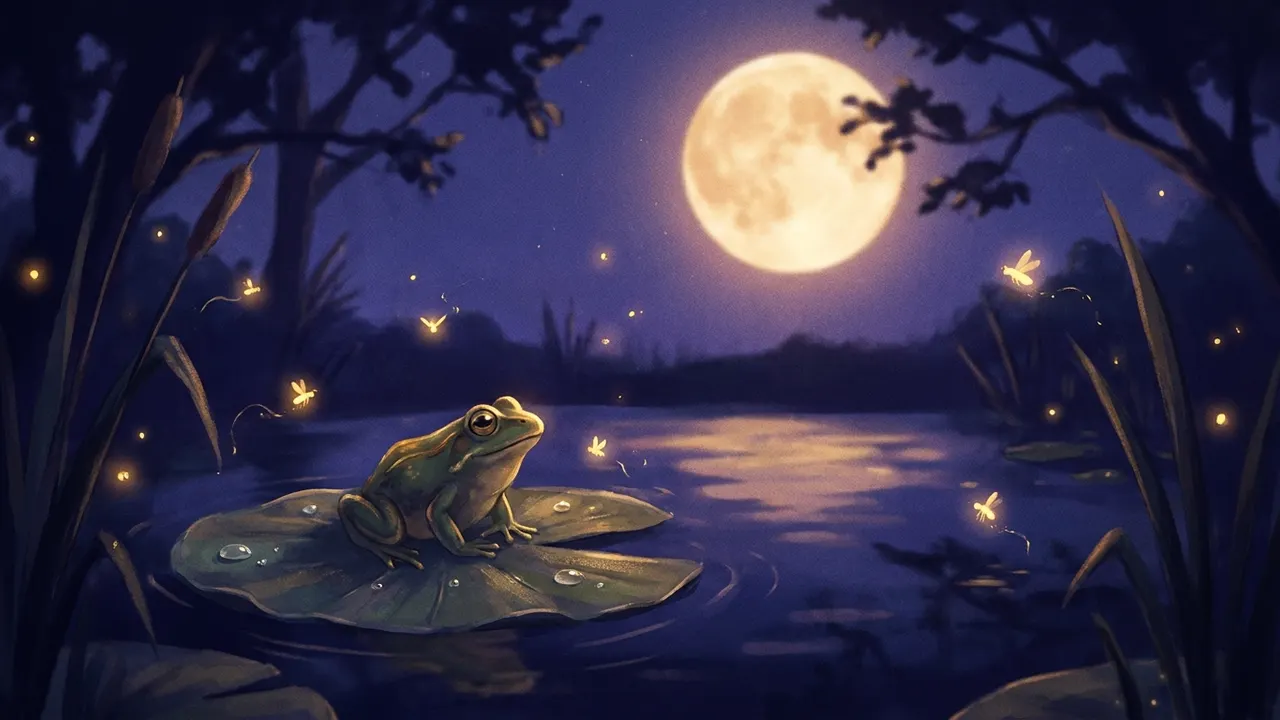
Water is the second clue. Frogs belong to ponds, rain and damp ground, and water in dreams is commonly linked with emotion. A frog at the edge of clear water can suggest feelings you are ready to look at. A frog in muddy water can suggest confusion you have not yet sorted out.
If you are searching for frogs dream meaning because the dream stuck with you, start with one question: what was the mood in the dream before the frog appeared? That mood usually shapes the reading more than any dictionary line.
Dreaming of frogs jumping or croaking: what is the message?
A frog leaping across a path or into water often reflects movement. You may be about to make a jump, a decision that feels sudden even though you have been circling it for weeks. If the frog lands safely, the dream may be nudging you toward confidence. If it keeps jumping out of reach, you may feel that an opportunity is slipping past.
Croaking adds a voice. Many people dream of a loud chorus of frogs at night, the way you would hear near a pond or after heavy rain. That can mean something in you wants to be heard, or that background worries have become noisy. One single croak in a quiet dream can feel like a call to pay attention to a small thing you have been ignoring.
Pay attention to your reaction to the sound. Soothing croaking resembles a lullaby and may point to a need for rest. Irritating croaking, the kind that keeps you awake inside the dream, often echoes mental chatter or other people's opinions pressing in.
Is it a good sign to dream of frogs in your house or bed?
A frog inside the home brings the symbol close to your private life. You might find one in the kitchen, in the bathroom, or sitting on the pillow. Because the house usually stands for your inner world and family life, a frog there suggests the change is personal rather than something happening at work or in public.
A surprised, mildly funny encounter, like a frog hopping across the living room, can mean a small unexpected change is entering your routine. A frog in the bed is more intimate and sometimes links to feelings about closeness, trust or a relationship that is evolving. It does not have to be negative. Some people wake up laughing.
If the frog felt unwelcome and you were trying to push it out, ask what you are resisting in your own home life. It could be a decision about moving, a family tension, or even clutter you know you need to face. If you let it stay, you may be making peace with a change you have already accepted.
What if a frog bites you or a swarm of frogs attacks in your dream?
Frogs rarely bite in real life, so a biting or jumping-on-you frog in a dream is usually symbolic and a bit absurd. It tends to say that something small and irritating has become harder to ignore than you expected. Think of a minor problem you have been brushing off: an unpaid bill, a remark someone made, a task you keep postponing.
A swarm of frogs raises the volume. Many frogs at once can feel overwhelming, and it may reflect a pile-up of obligations or emotional demands, each one small, together exhausting. In some dreams the swarm is more strange than scary, and then it may be about abundance, a lot of options or ideas arriving at the same time.
The Biblical plague of frogs is on the minds of many readers here, and some people feel uneasy after this dream because of it. In everyday terms, the image shows excess more than doom. Ask yourself where in your life there is too much of something, and what you could set down.
What does a green frog, a toad or a giant frog mean in a dream?
A bright green frog often leans toward growth, freshness and health, the colour of new leaves. A brown or muddy frog is earthier: it can point to practical matters, to grounding yourself, or to something unglamorous that still deserves attention. A golden or unusually colourful frog usually feels special, and people often read it as a sign of value hidden in something ordinary.
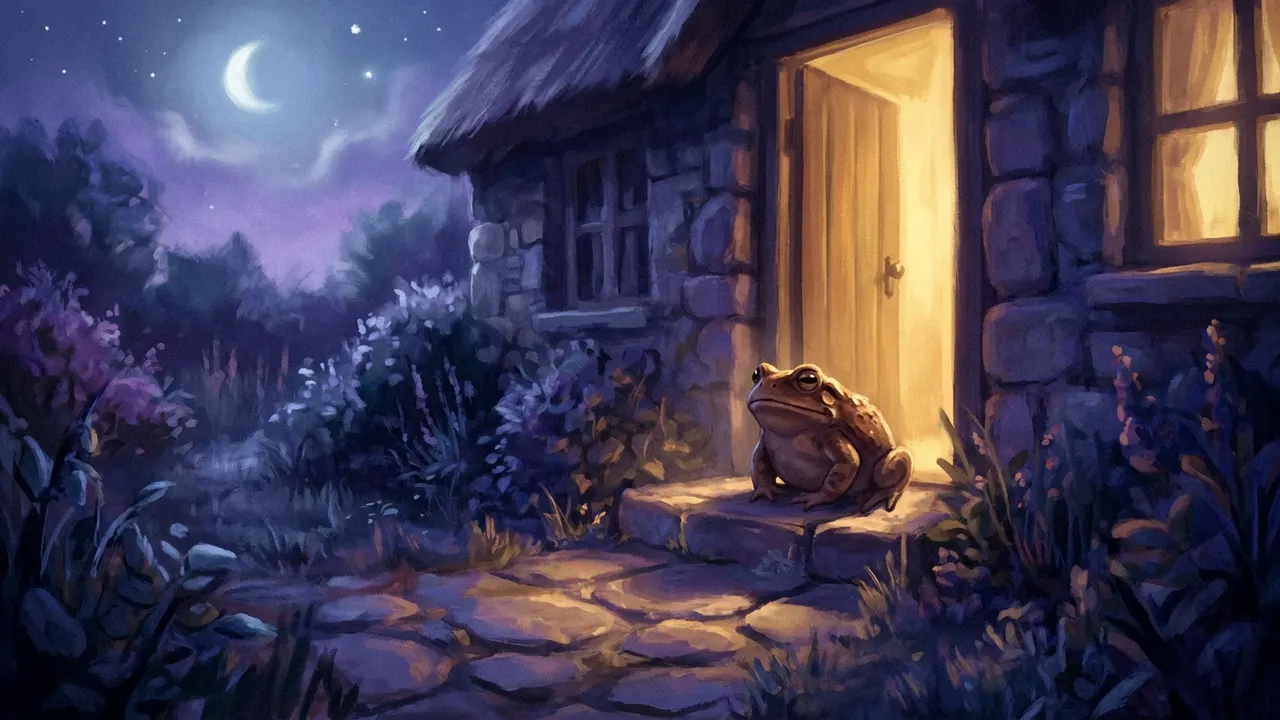
A toad is not simply a frog with bumpy skin in dream symbolism. Toads are often linked with things that look rough on the outside but carry quiet strength, and in folklore with protection and hidden wisdom. A toad at your door can suggest that a plain, unattractive duty or person has more to offer than you assumed.
Size shifts the message. A tiny frog in your palm may relate to a delicate hope or new idea that needs gentle handling. A giant frog can represent a change or feeling that has outgrown its box. If you feel afraid of it, it may be something you have been shrinking in your mind that now demands to be taken seriously.
How do psychologists read a frog dream?
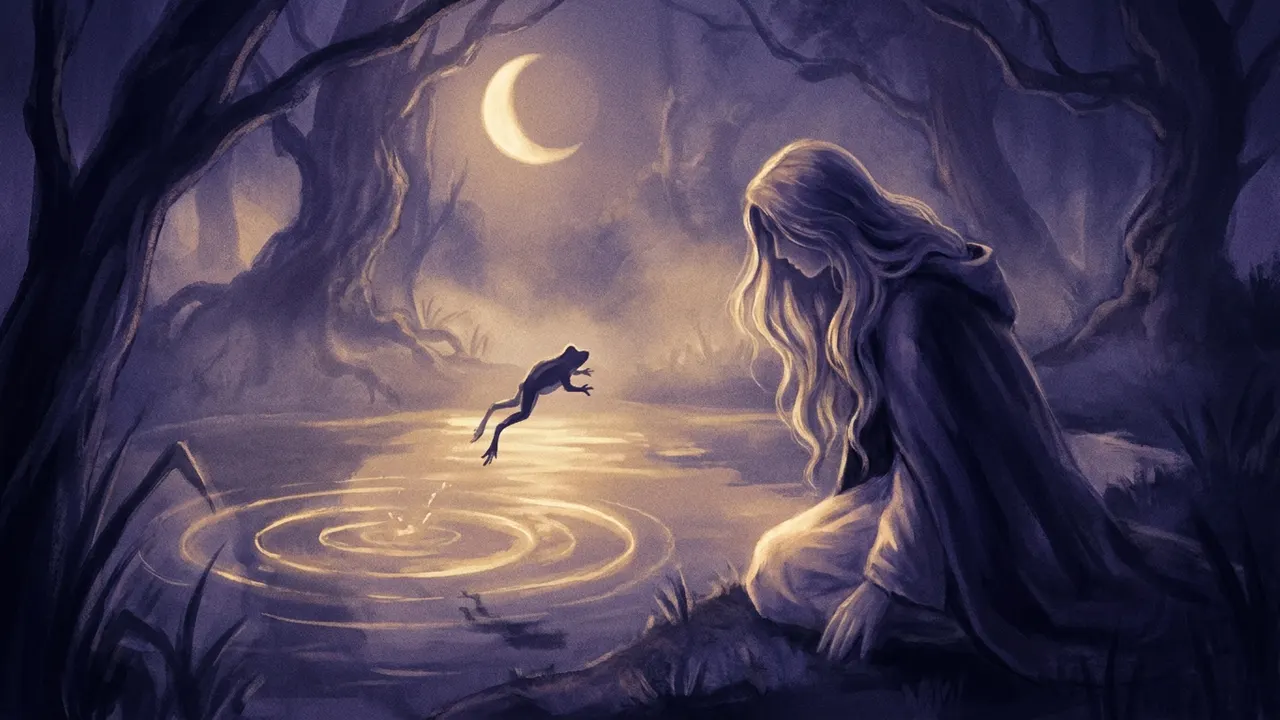
Carl Jung treated animals in dreams as images of parts of ourselves, instincts and energies that we do not fully control. Seen that way, a frog can stand for a transitional part of you, still developing. Jung also wrote about the fairy-tale pattern of something unattractive turning into something valuable, and the story of the frog who becomes a prince fits it: what you feel reluctant to touch may be what changes you.
Freud, by contrast, looked for hidden wishes and symbols tied to the body and relationships. A reading in his tradition might link a frog to feelings of disgust or attraction you have difficulty admitting. Many modern therapists find such strict decoding too rigid, and treat the dream as a personal story rather than a code.
Present-day dream research generally suggests that dreams draw on what you have been thinking, feeling and experiencing lately, often mixing emotion with random imagery. So a frog may be less a message than a picture your mind grabbed to express a mood: awkwardness, anticipation, or a feeling of being in transition. The most reliable guide is your own association. What do frogs mean to you personally, from childhood ponds, a cartoon, a fear or a pet?
What do frogs mean in Christian, Islamic and Hindu dream traditions?
In the Bible, frogs appear most famously in the second plague of Egypt in Exodus, and in Revelation as unclean spirits coming from the mouths of the dragon, beast and false prophet. For that reason, some Christian readers see frogs in dreams as a warning about harmful speech, deceit or something spiritually draining. Others point out that the dream imagery is personal, and that a calm frog does not need to carry that association. Many believers prefer to pray over a dream rather than treat it as a fixed verdict.
In classical Islamic dream interpretation books attributed to Ibn Sirin, frogs are often linked with a person who talks a great deal, or with worship and glorification, because of a tradition about frogs' sounds. Interpretations vary between authors, and these are traditional readings, not rulings. Scholars have always stressed that a dream's meaning depends on the dreamer's own state and circumstances.
In Hindu and wider Indian folk tradition, frogs are tied to rain and the monsoon. The Rigveda has a hymn describing frogs croaking at the arrival of rains, so a frog can suggest fertility, relief and the return of life after dry times. Many people in India and Nigeria also grow up with folk sayings about frogs bringing rain or good fortune, which can colour how you feel on waking.
What should you ask yourself after a frog dream?
Start with the dream's emotional temperature. Did you feel curious, repelled, amused, trapped? Then ask what in your waking life matches that feeling. A change you are slow to accept, a task that feels slimy and unpleasant, a hope still taking shape: each of these fits a frog.
Next, look at the setting. Pond, kitchen, road or bed each place the symbol in a different part of your life. Ask who else was there and what you did. Did you pick the frog up, step around it, scream, or watch quietly? Your behaviour in the dream often mirrors how you are handling something now.
For a short journaling exercise, write for five minutes beginning with the sentence, 'The frog in my dream was...' and describe its colour, size, location and mood without editing. Then write a second line: 'Right now in my life, the thing that is changing is...' Read it back and underline anything that surprises you. Return to it in a few days and see whether the meaning has shifted.
When is a recurring frog dream worth talking about?
Most frog dreams are harmless and fade within days. If the same dream keeps returning, or it leaves you anxious, sleeping badly or dreading bedtime, it may be worth mentioning to someone you trust, such as a friend, a counsellor or a doctor.
Recurring dreams often repeat because something in waking life has not been addressed, and talking it through can take away much of their charge. If a frog dream began after a stressful or painful event, being gentle with yourself and getting support is a sensible step, not an overreaction.
Quick tips
- Write down the dream as soon as you wake, including the frog's colour, where it was and how you felt, before the details fade.
- Compare the dream's emotion with one real situation from this week, rather than hunting for a universal definition of frogs.
- If your faith tradition has a reading of the symbol, treat it as one lens alongside your own feelings, and talk with someone you trust if the dream troubles you.
Frequently asked questions
Is dreaming of frogs good or bad luck?
It depends on the dream. Calm, friendly frogs are widely seen as signs of renewal and fresh starts, while aggressive or unpleasant ones tend to reflect stress or avoidance. A dream cannot predict what will happen, but it can show how you feel about change.
What is the frog in dream meaning for a woman or a man?
There is no separate meaning by gender in most modern readings. Some traditional sources link frogs to fertility or family matters, but the more reliable guide is your own situation and the feeling the frog gave you.
What does dreaming of frogs mean spiritually?
Spiritually, frogs are often tied to cleansing, rain, rebirth and moving between stages of life. In some Christian readings they can also carry a warning about deceit, because of how they appear in the Bible. Take the reading that fits your faith and your own sense of the dream.
Why do I keep dreaming of frogs?
Repeated frog dreams often track an ongoing transition or a feeling you have not fully dealt with. Notice what is going on in your life at the times the dream returns, and try the journaling exercise above. If the dreams are distressing, talking to someone can help.
What does a dead frog in a dream mean?
A dead frog may suggest that a phase, hope or habit has run its course. It can feel sad, but it can also be a sign of closure. How you felt when you saw it tells you which way to read it.
What does it mean to dream of a frog turning into a prince or a person?
This echoes the fairy tale and usually points to hidden potential in someone or something you underestimated. It may be about a person, a project or a part of yourself. Ask what you have been dismissing because it looked unpromising.
